
Reliability Testing to JESD22 Methods: Nine Test Types In-House
In-house reliability testing to JESD22 methods: HTRB, H3TRB, HT/HU, temperature cycling, thermal shock, solderability, HTSL, RSH and HPC.
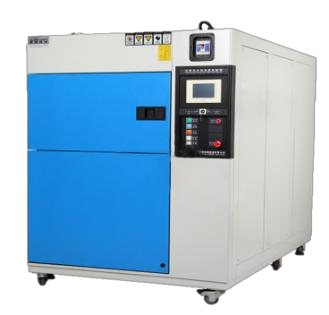
Reliability testing establishes whether a packaged device survives the thermal, electrical and humidity stress of its application over time. OCENME runs nine test types in-house to JESD22 methods — HTRB, H3TRB, HT/HU, HTSL, temperature cycling, thermal shock, solderability, RSH and HPC — with X-ray, C-SAM and die shear capability for failure analysis.
When this process applies
This page covers qualification and monitoring testing on packaged discrete devices: high-temperature reverse bias, humidity bias, high-temperature storage, thermal cycling and shock, solderability and solder heat. It does not cover wafer-level reliability, radiation testing or automotive qualification to AEC-Q101, which we do not offer.
Technical specifications
| Test types in-house | HTRB, H3TRB, HT/HU, HTSL, TCT, thermal shock, solderability, RSH, HPC |
|---|---|
| Standards | JESD22 methods; test conditions stated per report |
| Bias stress | HTRB and H3TRB at rated voltage and stated junction temperature |
| Thermal cycling | Air-to-air cycling; thermal shock by liquid-to-liquid where specified |
| Failure analysis | X-ray (YXLON), C-SAM (Sonoscan PVA), microscope, die shear and wire pull |
| Reporting | Sample size, conditions, read points and failures recorded per lot |
| Screening | Available as 100% screening or lot qualification by agreement |
Where it is the right choice
- New part number qualification before release to a customer
- Lot monitoring on production, at a frequency agreed per part number
- Customer-requested verification for a specific application condition
- Failure investigation where a returned unit must be sectioned and imaged
Where it is the wrong choice
Stating this explicitly matters more than a capability list: if your part falls into one of these categories, another process will cost you less.
- AEC-Q101 or AEC-Q100 qualification — we do not hold this and do not claim it
- Automotive PPAP evidence packages
- Board-level or system-level reliability testing of your assembly
- Long-term life prediction from a single short test; extrapolation needs a model and stated assumptions
Equipment
- HTRB bias ovens with per-device monitoring
- H3TRB humidity chambers with bias
- High-temperature storage and humidity ovens (HT/HU)
- Thermal cycling chamber (TCT) and thermal shock bath
- Solderability and solder heat test stations
- X-ray inspection system (YXLON)
- C-SAM acoustic scanning microscope (Sonoscan PVA)
- Die shear and wire pull testers, optical microscope
Process questions
What does HTRB test actually prove?
High-temperature reverse bias stresses the junction and termination at rated voltage and elevated temperature, which is where passivation and mobile-ion defects show up. It proves the device survives that bias at that temperature for that duration — no more. It does not prove avalanche ruggedness or dynamic switching behaviour, and a passing HTRB report cannot be used to claim automotive qualification.
How long does a qualification test take?
The stress duration drives it: HTRB and H3TRB are commonly 168, 500 or 1000 hours, and temperature cycling is counted in cycles, typically 500 to 1000. A 1000-hour test is six weeks of chamber time before read-out and reporting. Plan qualification into your schedule rather than expecting it as a shipping document.
Can I get a report for a part number I have not ordered yet?
Existing reports for a released part number can be shared under NDA. If no report exists for your part, we quote a qualification batch: build the lot, run the stress, test read points and issue the report. That is a paid activity with a lead time, not a document pulled from a folder.
Do you test to AEC-Q101?
No. We test to JESD22 methods and state the exact conditions in each report. AEC-Q101 has its own qualification and audit requirements, and we do not claim compliance. If your programme requires it, that is a supplier-selection criterion we will not meet, and saying so early saves both sides a wasted audit.
Related capabilities and products
Semiconductor Packaging
Semiconductor packaging converts a bare die into a solderable, protected, electrically tested device. OCENME runs automated packaging lines in Shenzhen with 50 million units per month capacity, covering die attach, wire bonding, moulding, trim and form and 100% electrical test across TO-220, TO-252, TO-263, TO-247, PDFN and TOLL outlines..
View capabilitySiC Device Assembly
SiC assembly differs from silicon assembly in three places: the die is thinner and more brittle, the junction runs at 175 °C instead of 150 °C, and the gate oxide is sensitive to screening escapes. OCENME assembles 650 V and 800 V SiC MOSFETs and 650 V SiC Schottky diodes with high-temperature die attach, copper bonding and 100% test at two gate voltages..
View capabilityTraceability & Quality System
Traceability is the ability to walk from a device in a customer’s hand back to the wafer lot it came from, and forward from any wafer lot to every carton shipped. OCENME maintains that chain through ERP, MES and WMS records under an ISO 9001:2015 quality system, with lot codes marked on every unit and PCN notification before process or die source changes..
View capabilityKnowledge Base
Tolerance tables, cost mechanics and DFM rules written for buyers rather than engineers.
Read articlesSend the part number and the operating conditions
Tell us the voltage class, current, switching frequency and what the device is replacing. You will get a datasheet, a parameter comparison at matched conditions, and a quotation with MOQ and lead time.