
Fast Recovery Epitaxial Diodes, 200 V to 1500 V
Fast recovery epitaxial diodes from 200 V to 1500 V for freewheeling, clamp and rectifier duty, in TO-220, TO-247, TO-3P, TO-252 and TO-263.
A fast recovery diode is a PN rectifier engineered for short reverse recovery, so it can freewheel in a switching converter without dominating turn-on loss in the opposing switch. OCENME supplies fast recovery diodes from 200 V to 1500 V in TO-220, TO-247, TO-3P, TO-252 and TO-263 packages, with Trr and IFSM stated per ordering code in the datasheet.
Scope: what this product page covers
This page covers silicon fast recovery epitaxial diodes for freewheeling across IGBTs and MOSFETs, output rectification in welding and induction heating supplies, clamp and snubber duty, and high voltage rectification. Schottky and SiC Schottky diodes have their own pages.
Specifications
| Voltage class | 200 V, 300 V, 400 V, 600 V, 1200 V, 1500 V |
|---|---|
| Average forward current | 1 A to 60 A depending on package and voltage class |
| Recovery behaviour | Fast and ultra-fast Trr variants; soft recovery on selected types |
| Surge current | IFSM stated per ordering code in the datasheet |
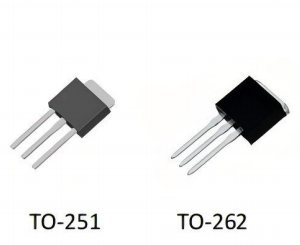
| Packages | TO-220, TO-220F, TO-247, TO-3P, TO-252, TO-263, TO-251 |
| Configuration | Single, common cathode and common anode duals where the package allows |
Materials
- Silicon epitaxial PN die with platinum or electron-irradiated lifetime control
- Copper lead frame with matte tin plating
- Moulding compound rated UL 94V-0
Manufacturing process
- Die incoming Epitaxial die inspected and recorded against the wafer lot; the lifetime-control method is recorded per lot.
- Die attach Solder die attach with X-ray void sampling on high-current packages.
- Bonding Wire or clip bonding depending on current; wire pull monitored each shift.
- Moulding and plating Transfer moulding, cure, deflash and matte tin plating.
- Test Forward drop, reverse leakage and breakdown at 100%; Trr characterised per die lot.
- Marking and packing Polarity and lot marked, tube or tape packing, outgoing AQL inspection.
Fast Recovery Diodes in production
Typical applications
- Freewheeling across IGBT and MOSFET switches in inverters
- Output rectification in welding machines and induction heating
- Clamp and snubber duty in high di/dt circuits
- High voltage rectification in X-ray, laser and electrostatic supplies
- Boost and buck freewheel duty where SiC is not justified
Quality and documentation
- Trr characterised per die lot, with the test conditions stated in the report
- 100% forward drop and reverse leakage test before marking
- IFSM verification on sampled units per lot
- Soft-recovery variants available where ringing is the design constraint
- Certificate of conformance and lot test record with each shipment
What we do not do
Trr is measured under specific conditions — forward current, di/dt and starting junction temperature — and the number is meaningless without them. A datasheet Trr of 25 ns at 25 °C is typically 50–80% higher at 125 °C, so a design that relies on the room-temperature value shows more turn-on loss in a warm enclosure. We publish Trr with its conditions; if a competitor quotes a bare number, ask at what temperature it was taken. We do not claim automotive qualification for these parts.
Technical questions
How do I choose between a fast recovery diode and a SiC Schottky?
Compare total loss, not Trr. A silicon FRD is cheaper and has lower forward drop below roughly 10 A; a SiC Schottky removes reverse recovery entirely and becomes cheaper overall above about 40 kHz or when the opposing switch turn-on loss dominates. Below 20 kHz and under 600 V, a silicon FRD is usually the right commercial answer.
What does soft recovery mean and when does it matter?
Soft recovery means reverse current falls without a sharp snap, so the voltage spike across stray inductance stays low. It matters in high di/dt circuits with long commutation loops — welding inverters, high-power IGBT legs — where a snappy diode produces EMI and device overvoltage that no snubber fully fixes.
Do you supply matched diode-IGBT pairs?
We supply discrete diodes and do not manufacture IGBT modules. A matched pair is selected against the IGBT switching speed and the commutation inductance, which requires your circuit details rather than a catalogue cross-reference. Send the IGBT part number and switching conditions and we propose candidates with the trade-off stated.
Is Trr tested on every unit?
No. Trr is a dynamic parameter measured on sampled units per die lot, because the test needs a defined di/dt and costs throughput. Forward drop, reverse leakage and breakdown are tested at 100%. The lot Trr report ships with the order on request.
Adjacent products and capabilities
High Voltage & Super Junction MOSFETs
A high voltage MOSFET is an N-channel switch rated between 400 V and 800 V, used in offline power supplies where the drain sees rectified mains plus leakage-inductance ringing. OCENME supplies 500 V to 700 V planar MOSFETs and 650 V super junction MOSFETs from 150 mΩ, at continuous drain currents of 7 A to 28 A, in TO-220F, TO-262F, TO-263 and TO-252 packages..
View productSiC Schottky Diodes
A SiC Schottky barrier diode is a majority-carrier rectifier with no minority-carrier reverse recovery, used where a silicon fast recovery diode would waste switching energy. OCENME supplies a 650 V, 20 A SiC Schottky family with 1.34 V forward drop, 130 A surge current and a 175 °C junction rating, in TO-220AC, TO-220FAC and TO-247 outlines..
View productBridge Rectifiers
A bridge rectifier is four diodes arranged so both half-cycles of an AC input produce the same DC polarity, which makes it the first stage of almost every offline power supply. OCENME assembles single-phase bridges from 1 A to 50 A in twelve package families including GBU, GBJ, KBJ, KBP, MSB, HBS, MBF and ABS, with glass-passivated die and 100% forward-drop and reverse-leakage test..
View productQuality & Inspection
CMM inspection to ±0.002 mm, FAI reports and PPAP documentation for every order.
Inspection capabilitySend the part number and the operating conditions
Tell us the voltage class, current, switching frequency and what the device is replacing. You will get a datasheet, a parameter comparison at matched conditions, and a quotation with MOQ and lead time.